Dragonsmane

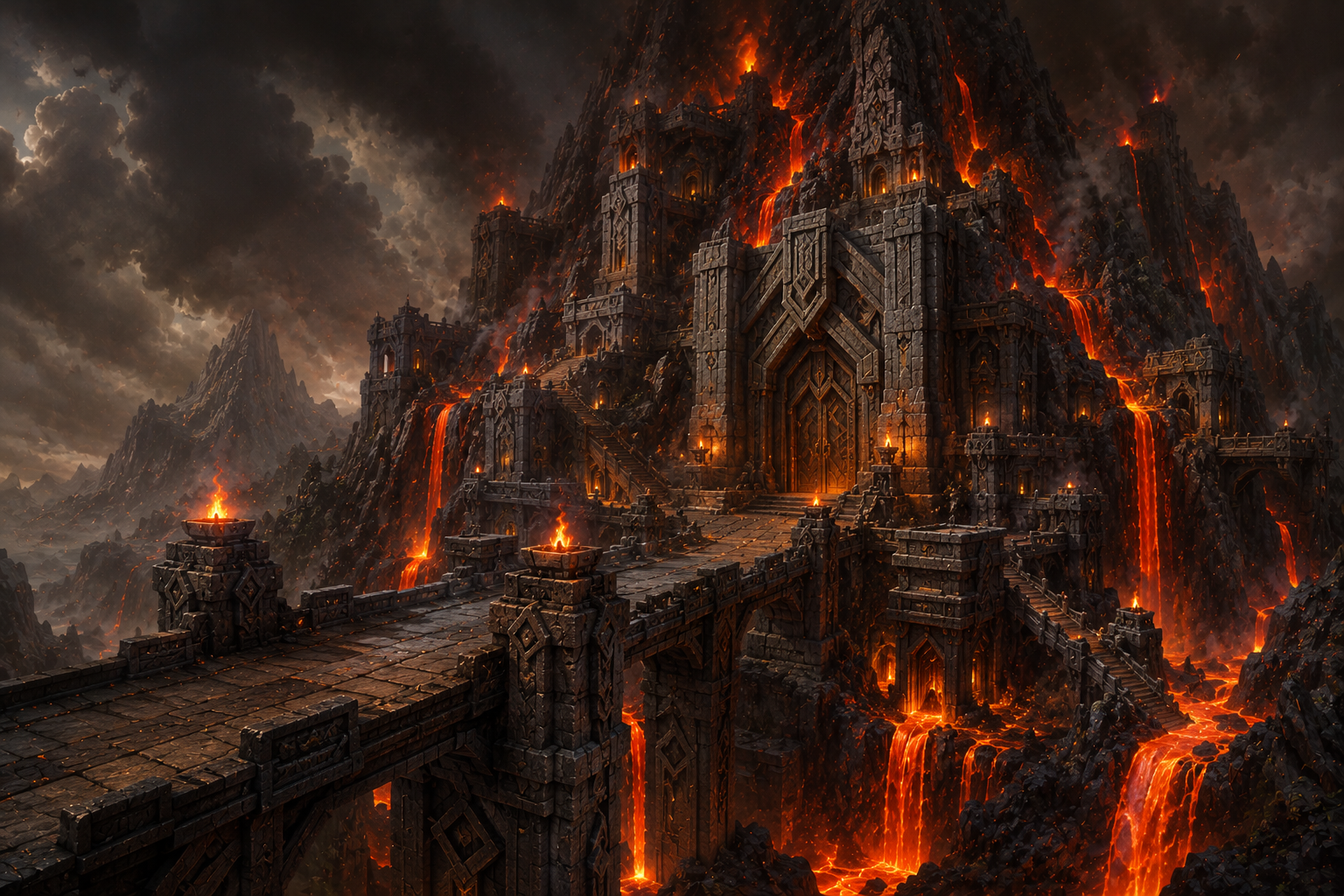
The Sealed Dwarven Stronghold of Western Keynew. Dragonsmane is a volcanic mountain that once held one of the great dwarven strongholds of the region. Its halls were carved deep into the mountain around ancient forges, roads, vaults, and fortified gates. Those gates have remained sealed since the dwarven–human war, when the stronghold vanished from the affairs of the surface world. Its last known ruler was Durgym Icerock. Today, Keynew remembers Dragonsmane as a dead mountain, while dwarves remember it as something unfinished.

Dragonsmane of Abadonya
Campaign Setting Overview Region: Keynew • Western Reach

At a Glance

Dragonsmane is both a volcanic mountain and the name of the sealed dwarven stronghold within it. The outer slopes are a harsh maze of basalt ridges, lava tubes, ash fields, mineral-rich ravines, and old roads that once carried dwarven trade into the mountain. The stronghold itself was built inside the volcanic stone, protected by monumental gates designed to withstand siege, fire, and time.

Smoke and steam still curl from the upper slopes, and small tremors occasionally shake the old roads. No recognized settlement exists beyond the sealed gates. Human communities of Keynew keep their distance, and even prospectors generally work the outer foothills rather than approach the ancient dwarven entrances. The closer one travels to the mountain, the more the landscape gives way to red stone, black glass, sulfur springs, old fortifications, and ruins left from the war.

Common Names: Dragonsmane, the Sealed Hold, the Mountain of Icerock
Region: Keynew, along the old dwarven frontier
Former People: Dwarves
Last Known Ruler: Durgym Icerock
Status: Sealed since the dwarven–human war
Terrain: Volcanic highlands, ash fields, canyons, lava tubes, basalt cliffs
Nearest Settlements: Ashfall Watch, Ember Hollow, Ironcrest Outpost, Riverbend Farms
Primary Routes: Cinder Trail, Old Stage Road, Stonegate Pass

History of the Burning Crown

The Stronghold That Closed Its Gates

Dragonsmane was once a major dwarven stronghold built within the volcanic mountain. Its people carved roads, halls, defensive galleries, forges, storehouses, and deep living chambers directly into the stone. For generations the hold controlled the western approaches and stood as one of the great symbols of dwarven power in the region.

The final ruler remembered in surviving accounts was Durgym Icerock. During the dwarven–human war, Dragonsmane became one of the conflict's defining strongholds. What happened in its final days is still argued over, but the result is known: the great gates were sealed, the roads into the mountain were abandoned, and Dragonsmane withdrew completely from the world beyond its walls.

The gates have never officially reopened. Human stories claim that only death remains inside—that the old halls are tombs, the forges are cold, and everything that once lived beneath the mountain is gone. Dwarven tradition is far less certain. Among dwarves of the region, Dragonsmane is often spoken of not as a ruin, but as a sleeping hold whose story has not yet ended.

An old dwarven saying survives in several forms: when the doors of Dragonsmane open again, an age forgotten by the world will return with them. Whether this is prophecy, mourning, or simply the stubborn hope of a displaced people depends entirely on who is telling the tale.

Major Locations

The Dragonsmane Frontier

Ashfall Watch — A fortified watch station overlooking the eastern approaches. Rangers, scouts, and road wardens track eruptions, monster movement, and suspicious travelers entering the western highlands.

The Cinder Trail — The most reliable route into Dragonsmane. The trail crosses old lava fields and narrow shelves marked by iron stakes, cairns, and emergency shelters.

Stormscar Ridge — A high basalt ridge regularly struck by violent electrical storms. Its exposed heights provide excellent views across western Keynew, but travel during bad weather is extremely dangerous.

Ember Hollow — A sheltered mining and smithing settlement built around warm springs and naturally heated caverns. It is one of the last dependable places to resupply before entering the inner mountains.

Ironcrest Outpost — A defensive stockade protecting caravans, miners, and the western roads. Its garrison maintains warning beacons that can be seen for miles.

Riverbend Farms — Fertile farms in the lower foothills enriched by volcanic soil. Much of the food supplying the western settlements comes from this surprisingly green stretch of country.

The Old Stage Road — An older trade road, partly abandoned after landslides and repeated monster attacks. Smugglers and travelers wishing to avoid checkpoints still use portions of it.

Fisher's Rest — A small stopping point where cold streams descending from the mountains broaden into calmer waters. Caravans often make their final repairs here before turning west.

Stonegate Pass — The fortified mountain route leading toward Petra. Weather, rockslides, and regional tensions can close the pass with little warning.

People of Dragonsmane

A Borderland Living Beside a Dead Hold

No recognized population lives inside Dragonsmane today. The communities around it are frontier settlements of Keynew, military watches, mining camps, and scattered dwarven families who remained in the region after the war. These groups may share the same roads, but they do not share the same understanding of the mountain.

Human settlers usually treat Dragonsmane as a dangerous ruin best left sealed. Dwarves often regard the stronghold with a mixture of grief, pride, anger, and expectation. Some families still preserve keys, clan records, old route maps, military honors, or stories tying their ancestors directly to the sealed hold. To them, Dragonsmane is not merely a dead fortress in human territory; it is part of dwarven history that was never truly surrendered.

Trade & Resources

What Draws People West

Dragonsmane produces high-quality iron, copper, obsidian, sulfur, alchemical minerals, gemstones, and rare heat-resistant stone. Small quantities of unusual crystal and magically reactive ore have also been recovered from deep veins, attracting scholars and wealthy buyers despite the risks.

Most trade flows eastward through the Cinder Trail and surrounding roads. Ore and worked metal leave the mountains while food, timber, cloth, medicine, lamp oil, and replacement tools come in. Control of a productive mine can make a family wealthy, but cave-ins, monster attacks, claim disputes, and sudden volcanic activity ruin fortunes just as quickly.

Hazards of the Region

Travel Is Never Routine

Ashfall: Wind can carry volcanic ash across the western roads with little warning, reducing visibility and making breathing difficult.

Quakes & Rockslides: Tremors frequently loosen cliffs and collapse neglected tunnels.

Fire Vents: Thin crusts may conceal steam fissures, sulfur pockets, or dangerously hot stone.

Predators: Mountain beasts, scavengers, and creatures adapted to volcanic heat hunt along isolated routes.

Old Tunnels: Ruined mines and natural lava tubes sometimes connect to chambers far older than the settlements above them.

Banditry: Valuable ore shipments attract raiders, smugglers, and mercenaries willing to vanish into abandoned roads.

Authority & Factions

Who Holds Power?

Keynew Road Wardens: Patrol the recognized roads and make certain travelers do not wander too close to unstable tunnels or restricted approaches to the sealed gates.

Mining Houses: Human and mixed trading interests work the outer foothills but generally avoid claims that could be interpreted as entering the old dwarven hold.

Dwarven Clans of the Region: Families descended from refugees, soldiers, smiths, and travelers once tied to Dragonsmane. Some consider themselves custodians of the hold's memory even though its gates remain closed.

Stonegate Garrison: Soldiers and engineers responsible for maintaining the pass toward Petra and watching the western approaches.

Keepers of the Old Paths: Guides who preserve older routes around the mountain. Several are dwarves who refuse to lead outsiders to certain entrances, claiming those roads still belong to Dragonsmane.

Local Customs

Traditions of the Western Reach

Travelers entering Dragonsmane commonly smear a line of gray ash across one boot or piece of gear. The custom supposedly began among miners as a reminder that everyone leaves some part of themselves on the mountain. Locals also avoid speaking a dead companion's name while underground until the body has been recovered or formally abandoned.

Before a caravan leaves a settlement, the lead wagon strikes an iron plate three times. One strike is for the road, one for those traveling it, and one for those expected to return. Outsiders sometimes mock the ritual; experienced caravan masters rarely do.

Rumors & Legends

Stories Heard Around the Fire

• Humans say nothing lives behind the gates of Dragonsmane and that opening them would reveal only a kingdom-sized tomb.

• Dwarves insist the gates were sealed from within, not destroyed, and that distinction matters.

• Some dwarven families still toast the name of Durgym Icerock, while others refuse to speak it at all.

• On certain nights a deep metallic sound can be heard from inside the mountain, like a hammer striking an anvil only once.

• Old road markers buried beneath the ash still point toward entrances that do not appear on any Keynew map.

• A common dwarven prophecy says that when Dragonsmane opens again, it will not merely restore a city—it will usher in an age the world has forgotten.

Adventure Hooks

Reasons to Enter Dragonsmane

The Gate That Moved: A patrol reports that one of the ancient gate mechanisms has shifted for the first time in generations.

The Icerock Record: A dwarven family claims to possess a surviving record from the reign of Durgym Icerock and wants protection while carrying it across Keynew.

Road Closed: A tremor reveals a buried dwarven road leading toward a forgotten secondary entrance.

Old Claims: Human miners discover a rich vein beneath land that a dwarven clan insists was part of Dragonsmane before the war.

The Sealed Door: A landslide exposes an ancient dwarven entrance, still intact and bearing a warning that appears to have been carved from the inside.

The First Hammer: Dwarves across the western settlements report hearing the same single hammer-blow from the mountain on the same night.