Goblins of Abadonya

Goblins are small, quick, clever survivors most strongly associated with Keynew. They thrive along neglected roads, crowded alleys, abandoned structures, scrapyards, riverbanks, and rough settlements where discarded things can be turned into tools, weapons, shelter, or profit. Keynew goblins are famous for speed, improvisation, mischief, scavenging, and an almost reckless willingness to try ideas everyone else considers unsafe.

Goblin of Abadonya
Goblins in AbadonyaQuick Hands of Keynew

Survivors in the Cracks

Keynew goblins are found wherever larger peoples leave gaps behind. Abandoned buildings, collapsed walls, unused cellars, roadside ditches, old warehouses, riverbanks, and forgotten ruins can all become homes.

Many communities survive by scavenging, repairing, trading, collecting scrap, guiding travelers through dangerous shortcuts, or taking work other people consider unpleasant.

Their reputation for chaos is not entirely undeserved, but Keynew goblins often see themselves less as destroyers and more as people willing to experiment with anything useful, interesting, or flammable.

AppearanceSmall, Fast & Expressive

Big Eyes, Bigger Expressions

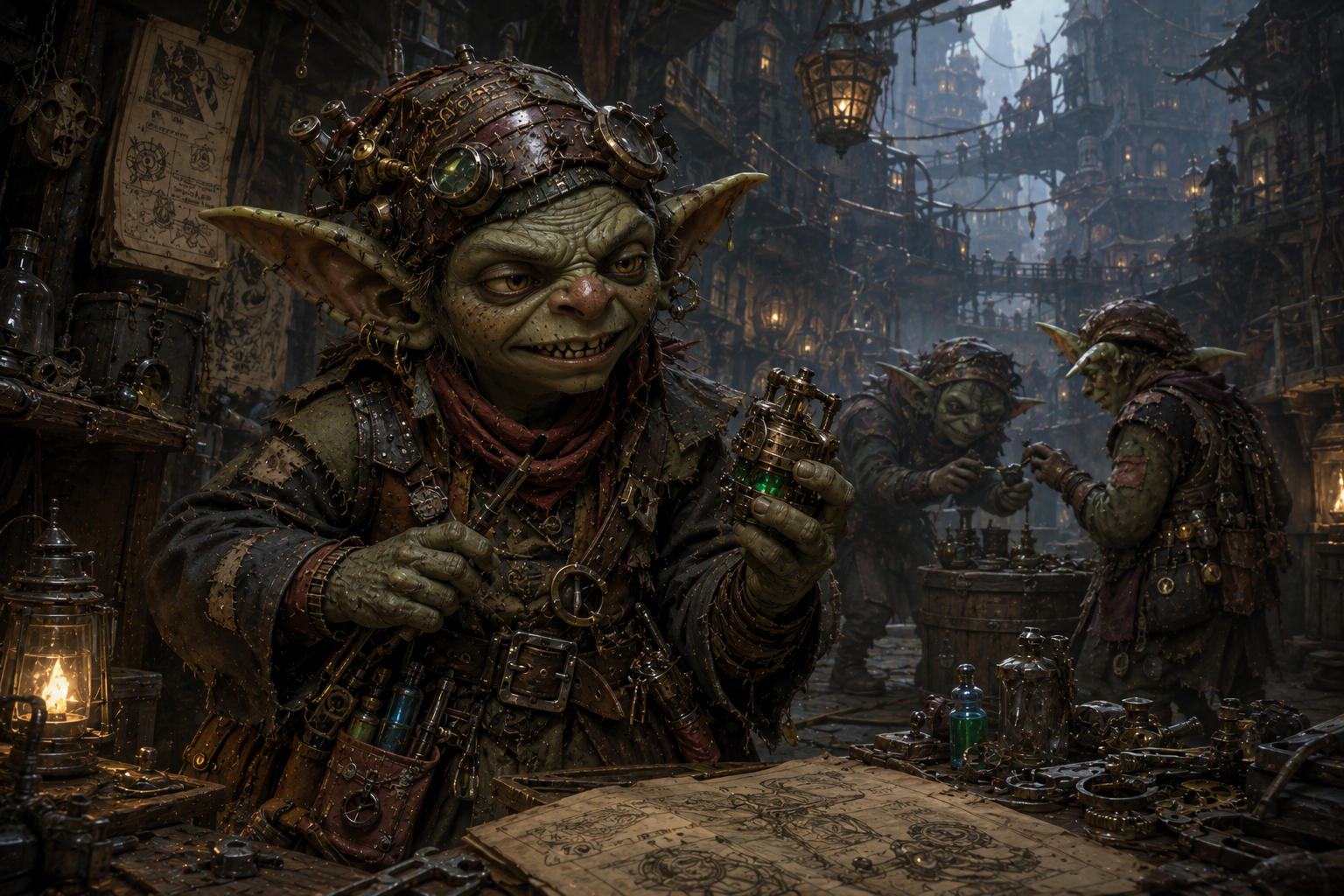
Goblins are small humanoids with oversized heads, wide mouths, sharp teeth, long ears, and large eyes adapted to darkness.

Skin tones vary through green, gray-green, yellow-green, muddy brown, and other earthy colors.

Keynew goblins favor practical clothing assembled from whatever is available: patched coats, belts with too many pouches, scavenged boots, mismatched armor, scarves, bits of old uniforms, and repurposed merchant cloth.

A goblin's belongings are often covered in personal marks, crude drawings, charms, trophies, and modifications that make perfect sense to the owner.

Scrapcraft & ImprovisationNothing Is Truly Useless

If It Can Be Fixed, Trade It

Keynew goblins are talented scavengers. Broken wagon wheels become barricades, bent cookware becomes armor plates, discarded hinges become trap parts, and cracked lanterns become something entirely different.

Their work is not always elegant, but it is frequently clever. Goblin workshops tend to be crowded, noisy, and filled with objects whose purpose is obvious only to the person building them.

Some goblins become skilled tinkers, alchemists, trappers, locksmiths, or repairers precisely because they grow up surrounded by materials other people have already decided are worthless.

Communities & FamiliesBands, Warrens & Neighborhoods

Belonging Matters

Goblin communities can be organized around extended families, neighborhood groups, traveling bands, scavenger crews, or tightly packed warrens.

Leadership often goes to whoever can keep food coming in, prevent unnecessary fights, find new opportunities, or talk stronger neighbors out of attacking.

Goblin communities can be argumentative and noisy, but loyalty to friends and family is often fierce once established.

In mixed Keynew settlements, goblins are increasingly common as laborers, couriers, mechanics, dock workers, street vendors, scouts, and adventurers.

Keynew CultureRoads, Alleys & Forgotten Places

Where the Old World Leaves Open Doors

Keynew is especially suited to goblin communities because the region contains old roads, ruined structures, expanding cities, neglected alleys, workshops, trade routes, and places where wealth and waste exist side by side.

Some goblins live near Golandria or Koin, where discarded goods and constant traffic create opportunities. Others prefer smaller roadside bands near Mendiville, abandoned stretches of the Old Stage Road, or remote ruins where few larger settlements bother to expand.

They are particularly good at learning unofficial routes through cities and wilderness alike—storm drains, broken walls, roof paths, maintenance tunnels, forgotten bridges, and animal tracks.

Faith & OutlookSurvive First, Explain Later

Practical Belief

Goblin faith in Abadonya is highly varied. Some follow gods connected to luck, survival, fire, craft, nature, or whatever deity seems most relevant to the community.

Namir attracts goblins who love fire, smithing, and invention, while Trentula is respected among wilderness bands and scavengers who live close to the land.

Goblin morality is individual. Communities can be generous, selfish, violent, cooperative, mercantile, or anything between. Their strongest shared cultural instinct is often simple: survive long enough to try the next idea.

Pathfinder 1e RulesRules Unchanged

Standard Pathfinder 1e Racial Traits

Ability Score Modifiers: Goblins gain +4 Dexterity, –2 Strength, and –2 Charisma.

Type: Goblins are humanoids with the goblinoid subtype.

Size: Goblins are Small creatures and gain a +1 size bonus to AC, a +1 size bonus on attack rolls, a –1 penalty on combat maneuver checks and CMD, and a +4 size bonus on Stealth checks.

Fast: Goblins have a base speed of 30 feet despite their Small size.

Languages: Goblins begin play speaking Goblin. Goblins with high Intelligence scores can choose Common, Draconic, Dwarven, Gnoll, Gnome, Halfling, and Orc as bonus languages.

Skilled: Goblins gain a +4 racial bonus on Ride and Stealth checks.

Darkvision: Goblins have darkvision 60 feet.

Race Points: 10 RP.

These are the Pathfinder 1e racial mechanics used for goblin characters in Abadonya.

Goblin AdventurersToo Curious to Stay Put

A Good Idea at the Time

Goblins become adventurers for almost any reason: profit, curiosity, exile, friendship, revenge, boredom, scavenging rights, or the promise that somewhere dangerous probably contains something valuable.

Rogues, alchemists, rangers, bards, fighters, gunslingers, and other agile or improvisational classes are common, though goblins can pursue any class.

A Keynew goblin adventurer might know a shortcut no map records, recognize useful junk everyone else ignores, or volunteer for a plan mainly because no one has yet explained why it is a terrible idea.

Race IndexAbadonya Archive

Return to the Races of Abadonya index to browse other ancestries.