
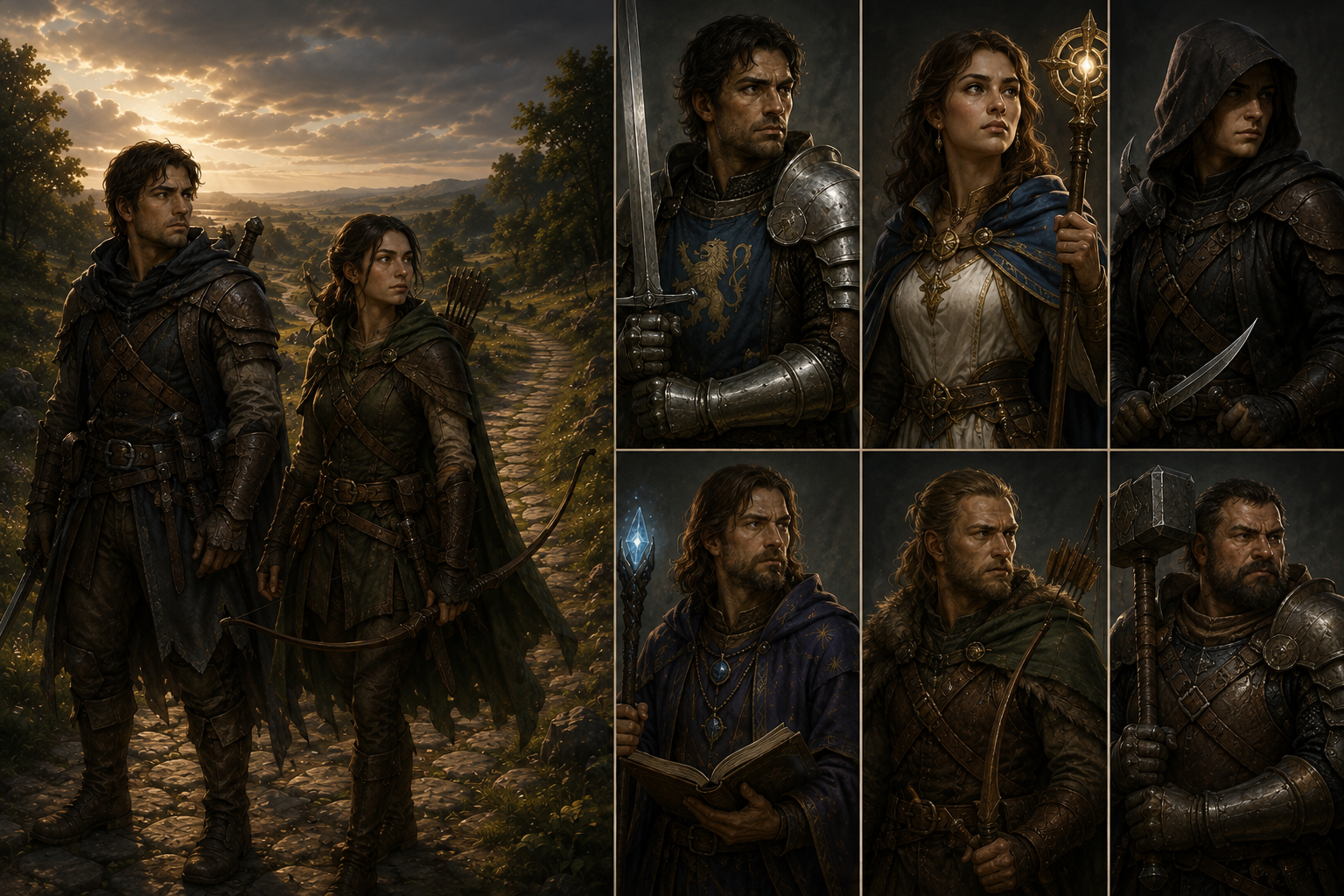
Humans of Abadonya

Humans are found in every known region of Abadonya. Their kingdoms, trade roads, ports, frontier settlements, temples, armies, and adventuring companies are as varied as the lands themselves. No single culture defines humanity here; humans are shaped by the region that raised them and by the choices they make afterward.

Human of Abadonya
Human Overview Core Race • Pathfinder 1E

The People Found Everywhere

Human communities stand beneath the cold skies of Frostmarch, along the trade roads of Keynew, within the deep forests and border settlements of Eirlyn, among the arcane enclaves of Aurelion, across the islands of Oriander, beside the desert routes of Petra, and even within the difficult lands of Zan'Karu.

Their greatest strength is adaptability. A human raised in Golandria may grow into a sailor, scholar, soldier, merchant, priest, or mage, while one born in Frostmarch may learn survival and warfare before ever seeing a great city. Humans build quickly, travel far, adopt useful customs from neighboring peoples, and often become the connective tissue between Abadonya's very different cultures.

Physical Description Abadonya Lore

Humans display a tremendous range of height, build, complexion, hair, eye color, dress, and ornamentation. Regional identity is often more noticeable than ancestry. Frostmarch humans favor heavy furs and practical layered clothing; Petra's people commonly dress for heat, dust, and long travel; Oriander's coastal communities favor light garments suited to wind and salt; and the great settlements of Keynew contain fashions imported from nearly every corner of the world.

Scars, family crests, guild marks, military badges, holy symbols, and regional jewelry frequently tell more about a human than appearance alone. In cosmopolitan cities, humans often incorporate elven, dwarven, gnomish, or other cultural influences without surrendering their own identity.

Society & Regional Origins Every Region

Humans Across the Seven Regions

Keynew: Merchants, soldiers, farmers, sailors, craftsmen, scholars, and adventurers are common. Human settlements here range from major coastal powers such as Golandria to hard-working towns and frontier roads.

Frostmarch: Humans survive beside dwarves and other northern peoples in a land where endurance, community, and preparation can mean the difference between life and death.

Eirlyn: Human enclaves and settlements exist alongside ancient elven lands. Those who live near the Eternal Woods often learn respect for old boundaries, old magic, and the dangers of assuming every road belongs to civilization.

Aurelion: Humans are drawn to centers of magical study, strange phenomena, and ambitious scholarship. Arcane talent is admired, but curiosity without caution can be costly.

Oriander: Island life creates sailors, traders, navigators, performers, smugglers, privateers, artisans, and diplomats accustomed to cultures meeting across the sea.

Petra: Humans inhabit oases, caravan routes, fortresses, and desert settlements. Hospitality, water, reputation, and safe passage can carry as much weight as coin.

Zan'Karu: Human communities endure among ruins, harsh trade routes, old Ophidian legacies, and dangerous cities. Adaptability here often means knowing when to bargain, when to flee, and when an ancient place should remain undisturbed.

Human Racial Traits Pathfinder 1E Rules

Standard Human Racial Traits

Ability Score: Human characters gain a +2 racial bonus to one ability score of their choice at creation to represent their varied nature.

Type: Humans are Humanoids with the human subtype.

Size: Humans are Medium creatures and receive no bonuses or penalties due to their size.

Base Speed: Humans have a base speed of 30 feet.

Bonus Feat: Humans select one extra feat at 1st level.

Skilled: Humans gain an additional skill rank at 1st level and one additional rank whenever they gain a level.

Languages: Humans begin play speaking Common. Humans with high Intelligence scores can choose any languages they want, except secret languages such as Druidic.

These are the standard Pathfinder First Edition human racial rules. The Abadonya material on this page changes setting lore only, not the mechanics.

Faith & Worldview Abadonya Lore

Humans may honor any of Abadonya's Eight Greater Gods, and faith often follows family, profession, local tradition, or personal experience rather than ancestry. A smith may call upon Namir, a sailor upon Rivera, a scholar upon Mandella, a healer or devoted guardian upon Seraphim, and a mage upon Rashtala. Others maintain household devotions to several gods or offer prayers according to circumstance.

Human attitudes toward ancient history also vary dramatically. Some regard the stories of Abadon, the Seven Keys, the Elemental War, and the oldest ruins as sacred history; others see them as warnings, mysteries, or opportunities waiting to be uncovered.

Human Adventurers Player Guide

Humans become adventurers for nearly any reason imaginable: duty, profit, curiosity, faith, revenge, scholarship, desperation, wanderlust, political service, family honor, or the simple belief that a larger life exists beyond the horizon. Their flexible racial traits make them equally suited to martial, magical, divine, skilled, or hybrid careers.

When creating a human character in Abadonya, choose a home region first. Consider what that place taught the character, what it failed to provide, and what finally caused them to leave. A Keynew merchant's child, a Frostmarch survivor, an Oriander deckhand, a Petra caravan guard, or an Aurelion apprentice all use the same Pathfinder rules while feeling completely different in play.