Orcs of Abadonya

Orcs are a powerful, enduring people most strongly associated in Abadonya with Frostmarch. Generations of life among glaciers, frozen valleys, mountain passes, and monster-haunted wastes have shaped cultures that prize physical strength, perseverance, clan loyalty, and the ability to survive when the land itself seems determined to kill everyone upon it.

Orc of Abadonya
Orcs in AbadonyaThe Iron Clans of Frostmarch

Strength Forged by the North

In Abadonya, orcs are most strongly associated with Frostmarch. Their clans occupy wind-scoured valleys, mountain footholds, ruined strongholds, and hard-won settlements scattered between the glaciers and frozen plains.

Frostmarch orcs respect strength, but strength is understood broadly. A warrior who holds a pass, a hunter who feeds a clan through winter, a smith who keeps weapons from shattering in the cold, or an elder who remembers the safe roads can all earn tremendous respect.

Conflict between clans is common, especially over hunting territory, mineral rights, old feuds, and access to defensible winter settlements. Yet the worst threats of Frostmarch often force rival clans to cooperate, at least until the danger passes.

AppearanceBuilt for a Harsh Land

Broad, Heavy & Scarred

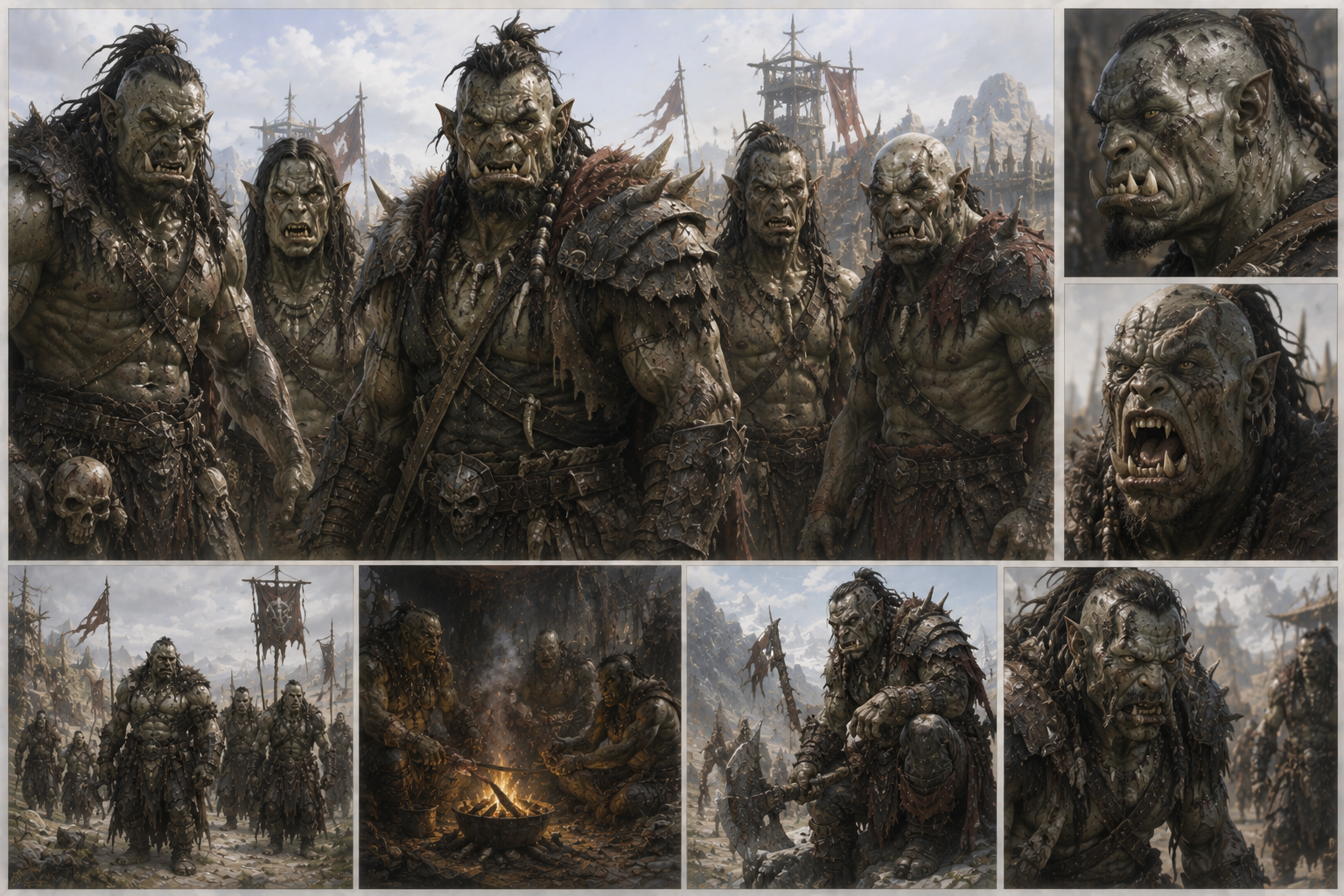
Orcs are powerfully built humanoids, generally taller and considerably more muscular than most humans. Broad shoulders, thick limbs, heavy jaws, and prominent tusk-like teeth are common.

Skin tones in Abadonya commonly range through dull greens, gray-greens, ash tones, and darker earthy shades. Hair is usually coarse and dark, though northern clans sometimes show pale or frost-streaked hair with age.

Scars are common and often treated as records of survival rather than imperfections. A Frostmarch orc may remember exactly where each scar came from and what lesson was learned earning it.

Clan LifeFrostmarch Traditions

No One Survives Winter Alone

Orc communities in Frostmarch are usually organized into clans rather than centralized kingdoms. A clan may consist of several extended families, allied households, sworn companions, and outsiders who have earned a place through deed.

Leadership is commonly practical. Chiefs who cannot protect food stores, defend territory, resolve feuds, or lead successful migrations do not remain respected for long.

Clan loyalty can be intense. Orcs may argue, brawl, or compete openly within a clan, yet turn immediately against an outside threat. Betraying those who depended upon you during winter is among the gravest insults in many Frostmarch traditions.

War & RaidingA Tradition Shaped by Scarcity

When Survival Becomes Conflict

Raiding has a long history among Frostmarch orcs. In poor years, livestock, stored food, weapons, and usable shelter can determine whether an entire clan survives.

Some clans have abandoned raiding in favor of trade, mercenary service, hunting contracts, and protection work. Others still regard seasonal raids as an accepted part of life.

Not every orc approves of these traditions. Younger generations in mixed settlements increasingly question old feuds, particularly when cooperation with dwarves, humans, and half-orcs offers better chances against Frostmarch's monsters.

Faith & OutlookFire Against the Cold

Strength, Forge & Survival

Orc faith in Abadonya varies by clan. Namir is especially respected among warriors, smiths, and those who see fire and the forge as symbols of survival against the northern cold.

Other clans honor Trentula through hunting and reverence for dangerous natural places, while individual orcs may follow any of Abadonya's gods.

Frostmarch orcs generally distrust weakness that comes from refusing to act, but they do not universally equate compassion with weakness. Protecting those who cannot presently protect themselves can itself be seen as proof of strength.

Pathfinder 1e RulesRules Unchanged

Standard Pathfinder 1e Racial Traits

Ability Score Modifiers: Orcs gain +4 Strength, –2 Intelligence, –2 Wisdom, and –2 Charisma.

Type: Orcs are humanoids with the orc subtype.

Size: Orcs are Medium creatures and have no bonuses or penalties due to size.

Base Speed: Orcs have a base speed of 30 feet.

Languages: Orcs begin play speaking Common and Orc. Orcs with high Intelligence scores can choose Dwarven, Giant, Gnoll, Goblin, and Undercommon as bonus languages.

Ferocity: Orcs possess the ferocity ability, allowing them to remain conscious and continue fighting when their hit points fall below 0. They are still staggered at 0 hit points or lower and lose 1 hit point each round as normal.

Weapon Familiarity: Orcs are always proficient with greataxes and falchions, and treat any weapon with the word “orc” in its name as a martial weapon.

Darkvision: Orcs have darkvision 60 feet.

Light Sensitivity: Orcs are dazzled in areas of bright sunlight or within the radius of a daylight spell.

Race Points: 8 RP.

These are the standard Pathfinder 1e orc racial traits from d20PFSRD. The Abadonya material on this page changes only setting lore and does not alter these mechanics.

Alternate Racial TraitsPathfinder 1e Options

Alternate Racial Traits

Dayrunner: The orc loses light sensitivity but takes a –2 penalty on all ranged attack rolls. This replaces Light Sensitivity.

Feral: Gain Survival as a class skill and a +1 racial bonus on melee weapon attack and damage rolls while at negative hit points. This replaces Weapon Familiarity and automatic languages.

Reckless Climber: Gain a +4 racial bonus on Climb checks made without rope and Acrobatics checks made to maintain balance. This replaces Ferocity.

Smeller: Gain a limited scent ability with half the normal range. This replaces Ferocity and Weapon Familiarity.

Squalid: Gain a +2 racial bonus on saving throws against nausea, the sickened condition, and disease. This replaces Ferocity.

These alternate racial traits are listed in the Pathfinder 1e orc material on d20PFSRD and use the normal replacement rules.

Orcs of FrostmarchAncestral Homeland & Major Population

The Northern Clans

Frostmarch is the principal homeland associated with orcs in the Abadonya Archive. Orc clans range from isolated mountain communities to semi-nomadic bands crossing the Aurora Plains and permanent settlements near strongholds and trade roads.

Relations with Frostmarch dwarves and half-orcs vary dramatically by location. Some communities maintain generations-old blood feuds; others trade, intermarry, or fight side by side against threats too dangerous for any one people to face alone.

The strongest orc communities are not necessarily the most violent. In Frostmarch, the clans that endure are usually those capable of adapting when the old ways stop working.

AdventurersBeyond the Clan Fires

Strength Tested Elsewhere

Orcs leave Frostmarch for many reasons: exile, curiosity, mercenary work, clan duty, religious calling, revenge, trade, or the simple desire to earn a reputation beyond familiar territory.

Barbarians and fighters are common because of the race's exceptional physical power, while rangers, druids, witches, clerics, cavaliers, and other classes also have strong traditions among Frostmarch clans. Orcs can pursue any class.

An orc adventurer from Frostmarch might seek a stolen clan relic, hunt a legendary monster, establish a new reputation after exile, or prove that strength means more than winning a fight.

Race IndexAbadonya Archive

Return to the Races of Abadonya index to browse other ancestries.